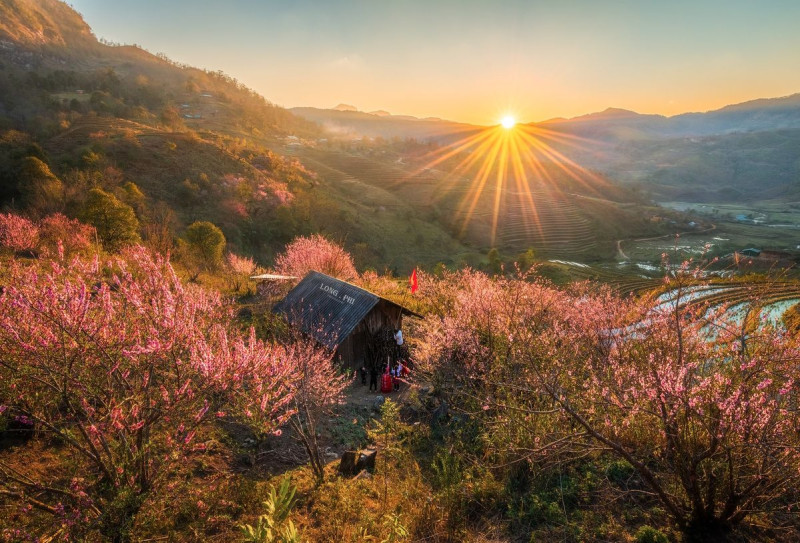


The history of Sapa is a profound chronicle of human adaptation and cultural layering, beginning with a mysterious civilization whose only legacy remains in the form of hundreds of ancient petroglyphs carved into the valley’s stones. Long before the modern borders were drawn, this rugged terrain became a sanctuary for the Hmong, Dao, Giáy, and Tày peoples, whose vibrant traditions and terraced agriculture continue to define the region’s identity today. The area’s trajectory shifted dramatically in the late 19th century following the Sino-French War, as French colonial interests moved into the northern highlands to secure the frontier. By 1897, French expeditions and missionaries began documenting the unique ethnic tapestry of these mountains, but it was a 1903 geographical survey that truly "discovered" the site’s potential. They named it Lo Suoi Tung, or the "valley of the long stream," and were immediately captivated by its temperate, cloud-forest climate—a stark and refreshing contrast to the sweltering humidity of the Red River Delta.
Recognizing Sapa as a natural refuge, the French colonial administration invested heavily in its development, constructing a sanatorium in 1909 and a military garrison shortly after. The completion of the Hanoi–Lào Cai railway in 1920 transformed the remote outpost into the "summer capital" of Tonkin, a prestigious hill station where nearly 300 colonial villas were built for the elite. This era of European elegance was short-lived, however, as the end of World War II ignited a long period of localized conflict and guerrilla warfare that eventually led to the destruction of almost all colonial architecture and the displacement of the local population. Even after the mid-century wars, the town faced further upheaval during the 1979 Sino-Vietnamese War, which briefly forced out the newer Kinh migrants who had settled there. It was not until the early 1990s that Sapa began its remarkable rebirth. With the government’s 1993 decision to open the region to international tourism, the town exploded from a quiet cluster of 40 rooms into a world-class destination. Today, the ancient carved stones of the valley sit on the UNESCO Tentative List, serving as a silent bridge between Sapa’s enigmatic prehistoric past and its thriving, multi-cultural present.
Unforgettable Adventures, Trusted by Travelers. Book at the Best Price!